ULB
Université libre de Bruxelles
- Infrared remote sensing
- Satellite retrievals
- Ammonia sources, budgets and monitoring techniques
- Nitrogen cycle
People
- Lieven Clarisse
- Pierre Coheur
- Marie-Thérèse El Kattar
- Lara Noppen
- Martin Van Damme

BELSPO · STEREO IV
Goal
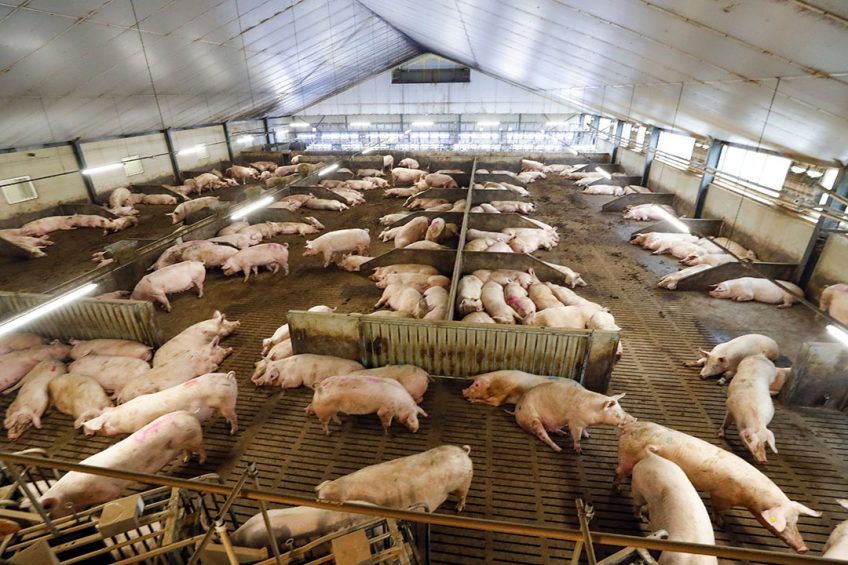
Better quantify and understand the sources and processes driving atmospheric NH3 agricultural and industrial emissions and subsequent deposition in Belgium
Ammonia (NH3) is one of the most important gaseous pollutants, contributing to the formation of secondary inorganic aerosol, and upon deposition, very detrimental to the environment. Despite its importance, knowledge of its emissions is subject to large uncertainties.
Measurements


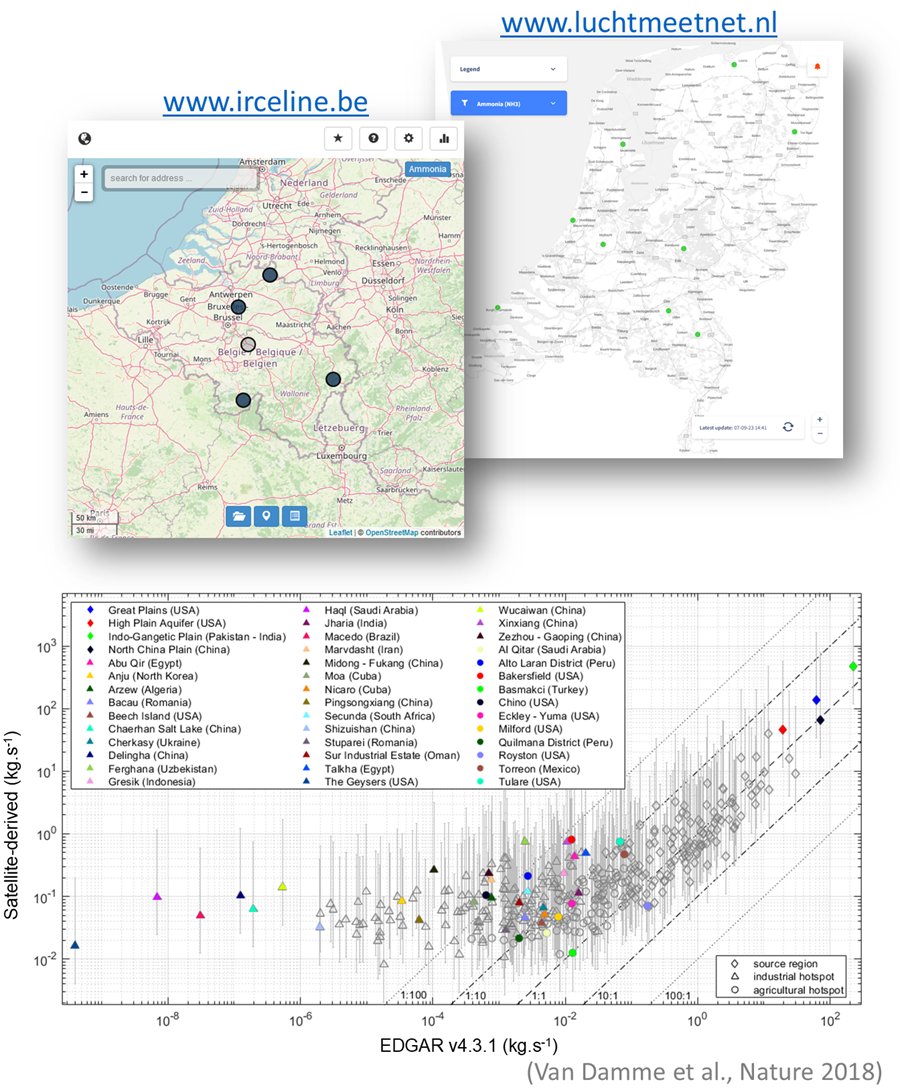
Exploit unique set of complementary monitoring techniques, consisting of in-situ measurements on-ground and infrared remote sensing from ground, aircraft and satellites
Modelling
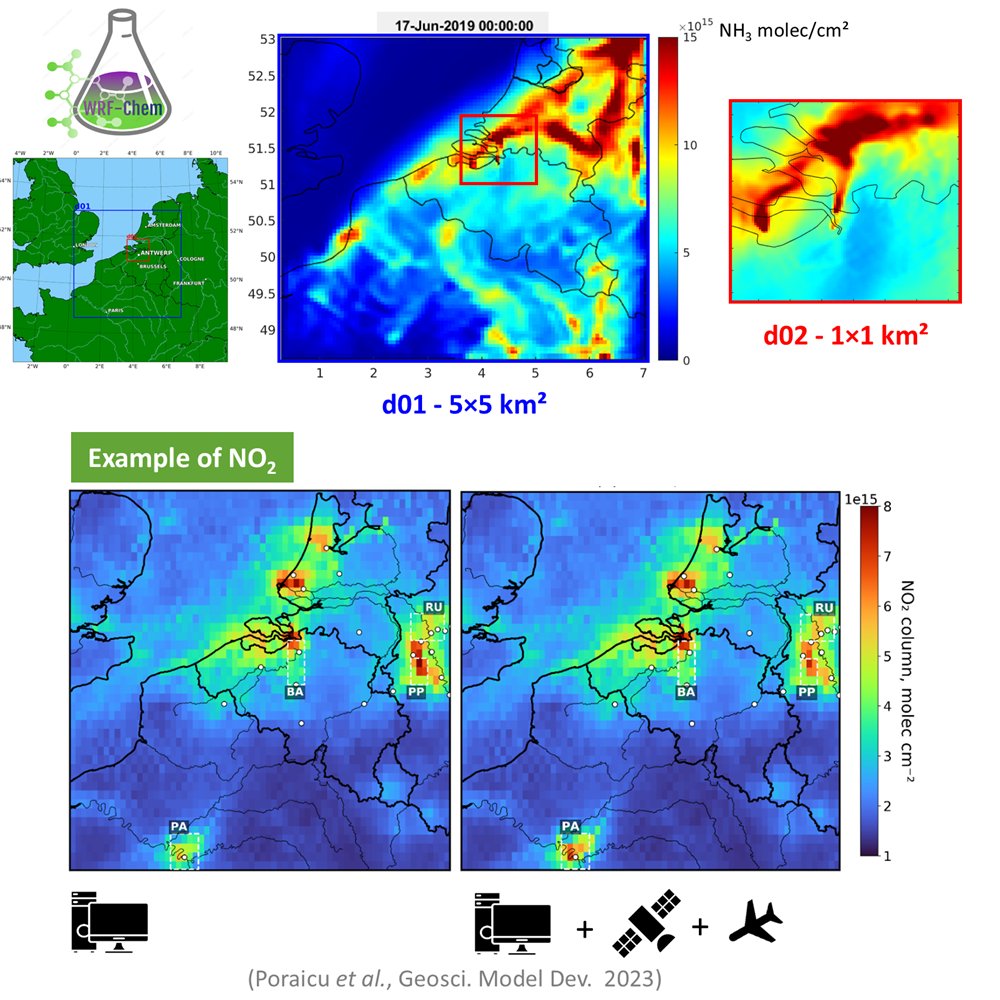
State-of-the-art modelling at very high spatial and temporal resolution will allow upscaling and bridging the different measurement scales
Develop an NH3 dataset at high spatial (6–7 km) and temporal (daily, every 30 minutes) resolution over the entire European domain, based on observations of the IRS satellite sounder
WP 2Characterise the NH3 spatiotemporal variations over Europe, from seasonal to diel variations and from the country to the regional scale
WP 2Survey regional NH3 at hyperspatial resolution (below 5 m) over key sites in Belgium and/or the Netherlands
WP 3Provide constraints on NH3 vertical profiles
WP 3Characterise local source contributions to point source measurements
WP 4Identify strengths and weaknesses of models in simulating the spatio-temporal distribution of NH3 and related compounds
WP 5Establish the NH3 trends (2008–present), assess their causes and estimate their consequences for air quality and NHx deposition over Belgium and the Netherlands
WP 5Quantify the contributions of NH3 and NOx emissions to nitrogen deposition over Belgium and the Netherlands
WP 5Impact
The results of this project will directly benefit the quality of the Belgian emission inventories, and on a wider scale the top-down emissions that can be derived from current (IASI, CrIS) and future satellite sounders (IRS, Nitrosat). The tools developed will also strongly support policy making processes aiming at reducing the environmental impacts of agriculture and nitrogen pollution in Belgium.
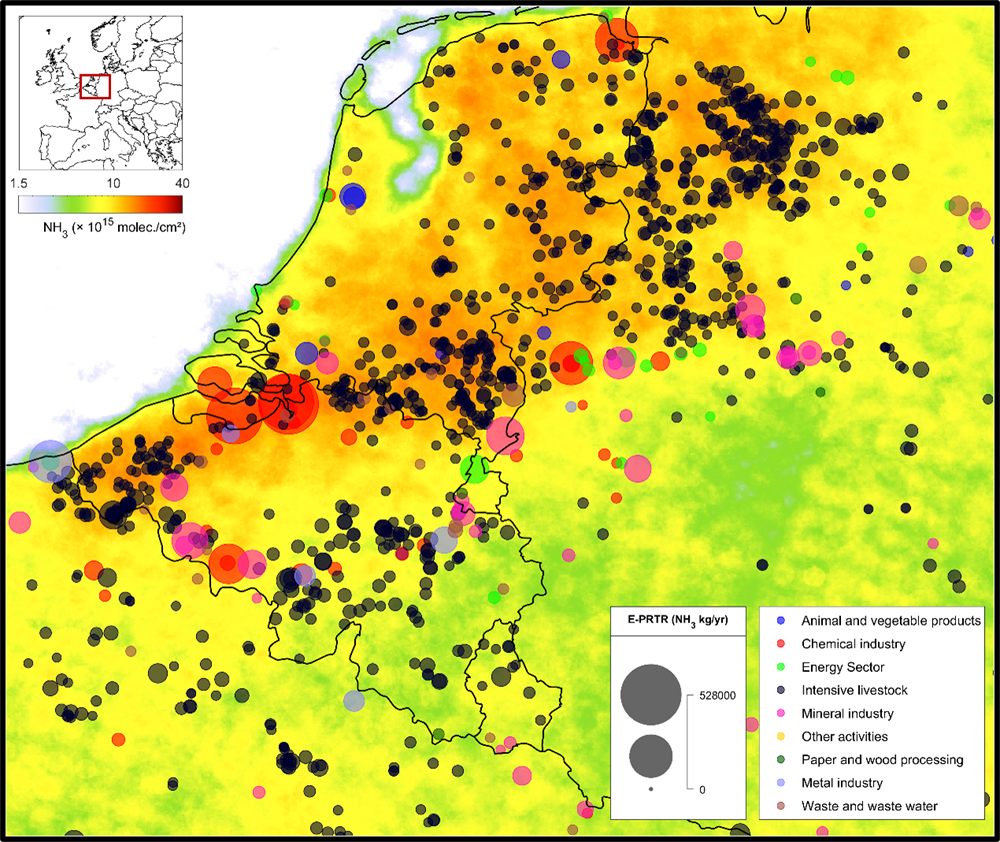
Atmospheric Nr emissions, mainly in the form of ammonia (NH3) and nitrogen oxides (NOx), have increased fivefold since preindustrial times. While NO2 concentrations have been declining steadily over the past decades, this is not the case for NH3 as shown in a recent study (Van Damme et al., 2021 and Figure 1). In that study, analysing 11 years of satellite data, it was shown that NH3 concentrations are globally on the rise, notably in the US (2.4%/yr), China (5.6%/yr) and Europe (1.9%/yr).
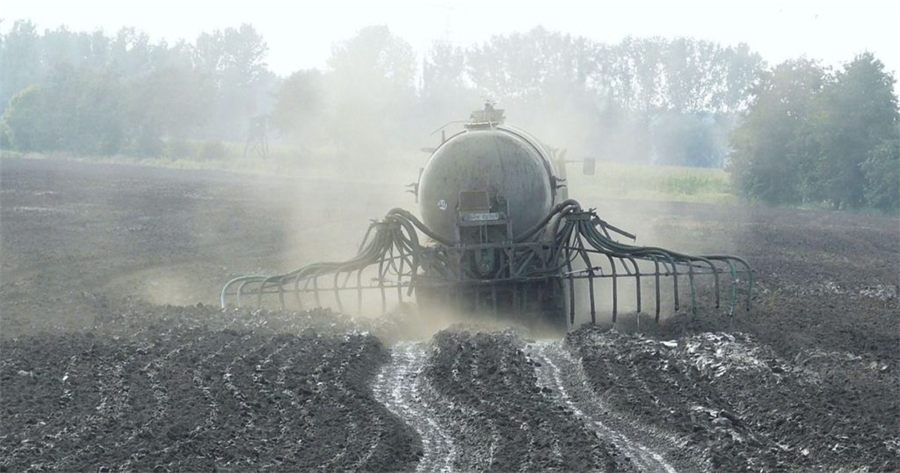
NH3 is mainly emitted by agricultural activities (in Europe, agriculture is responsible for 94% of the emissions (EC, 2022)). Other sources include biomass burning, waste, road transport and industries. Upon deposition in ecosystems, Nr threatens biodiversity and reduces soil and water quality. In Europe, 62% of ecosystems are exposed to excess levels of nitrogen. The projections for the next decade show little improvement, with 58% of the Natura 2000 areas at risk in 2030 (EEA, 2019).
NH3 is also a key precursor of atmospheric secondary particulate matter (PM2.5) which is responsible for millions of premature deaths per year worldwide. Defining and applying better management strategies for nitrogen is therefore on top of the environmental policy agendas (OECD, 2018; UNEP, 2019; Kanter et al., 2020; EC, 2022).
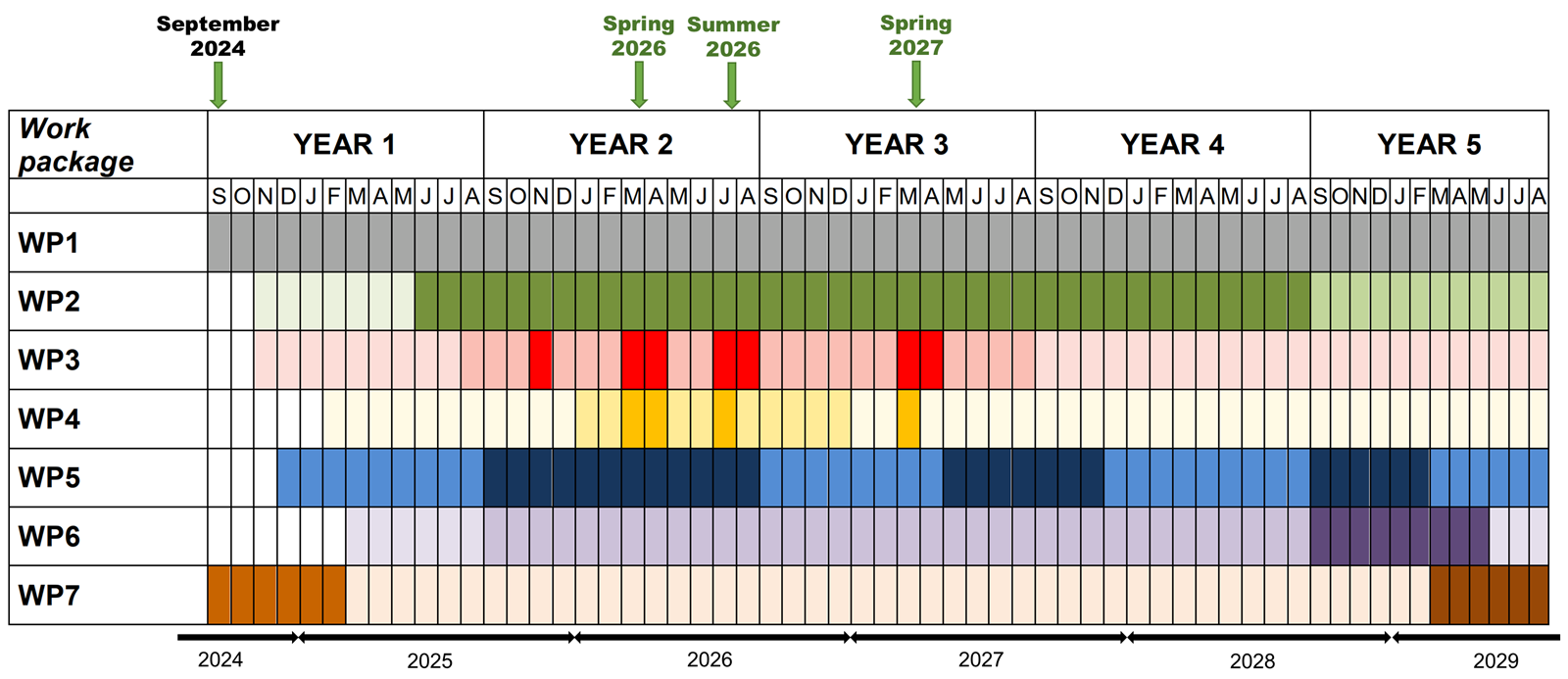
 ULB, BIRA-IASB
WP 3: Aircraft remote sensing of NH3
FUB, ULB
WP 4: In situ monitoring of local ammonia sources
ILVO, ULB
WP 6: Validation
 BIRA-IASB, ULB, ILVO, FUB
WP 5: Ammonia regional modelling
BIRA-IASB, ULB
WP 7: Valorisation and dissemination
 ULB, BIRA-IASB, ILVO, FUB
Lead partner in bold.
Work Packages / WP 2
Work package 2
ULB (lead), BIRA-IASB
Objective 1
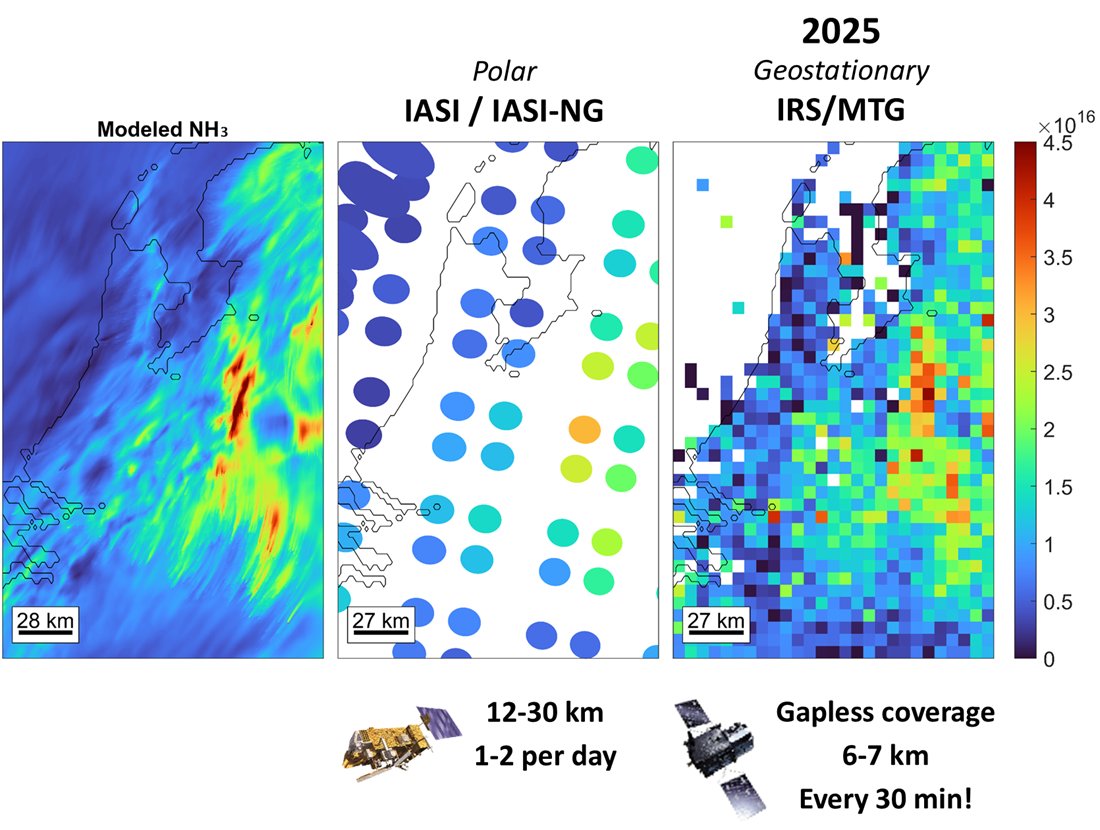
To develop an NH3 dataset at high spatial (6–7 km) and temporal (daily, every 30 minutes) resolution over the entire European domain, based on observations of the IRS satellite sounder
Objective 2
To characterise the NH3 spatiotemporal variations over Europe, from seasonal to diel variations and from the country to the regional scale
Objective 7, with WP 5
To derive a highly resolved top-down emission inventory over Belgium and the Netherlands
Objective 3
To survey regional NH3 at hyperspatial resolution (below 5 m) over key sites in Belgium and/or the Netherlands
Objective 4
To provide constraints on NH3 vertical profiles
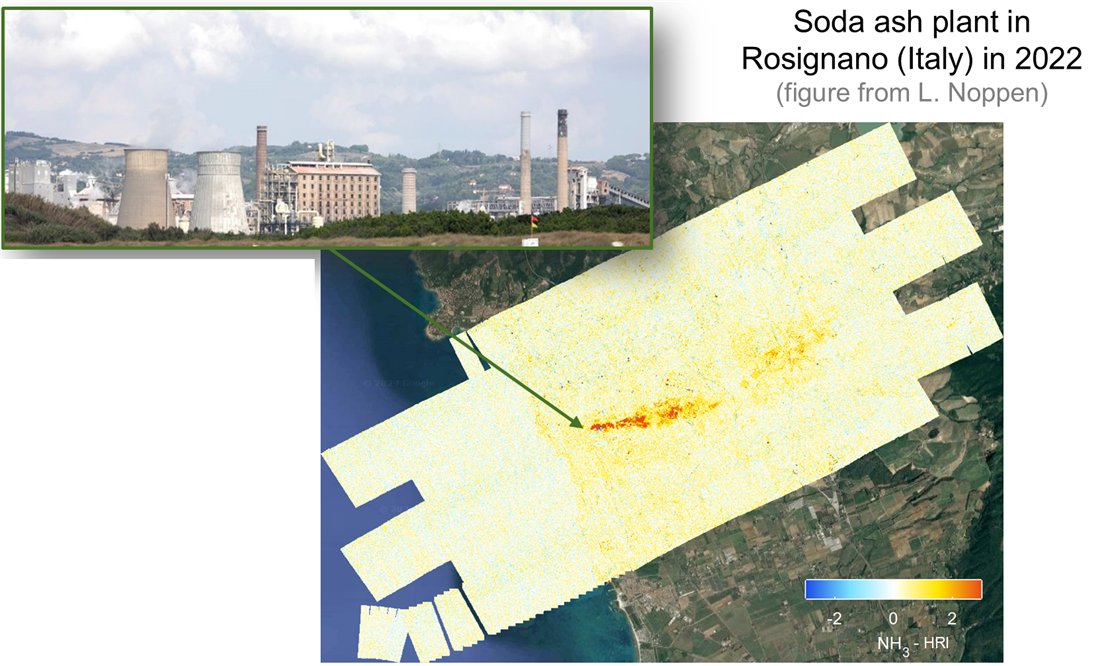
Clusters of CAFOs either in West Flanders or Northern part of the Antwerp Province are responsible for large NH3 emissions. Both provinces are characterised by the largest livestock unit density in Europe. While open cattle CAFOs have been surveyed in the US, European-style enclosed livestock housings (pigs, chickens) have not, and are the dominating source of NH3 emissions in the lowlands.
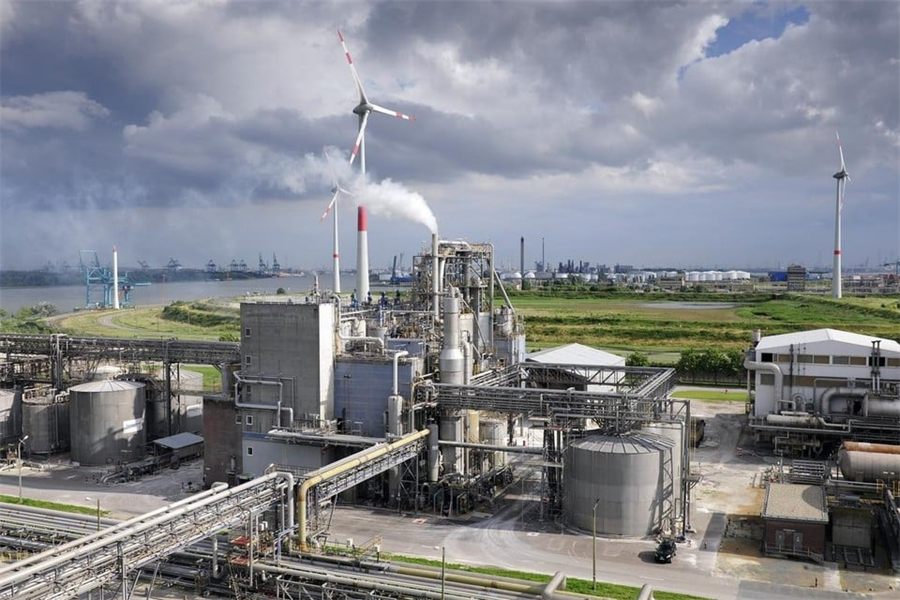
The harbour of Antwerp, and the associated industrial park is home to several large chemical companies that report significant NH3 emissions. Satellite distributions of NH3 are notoriously difficult to analyse over harbours because of the large number of densely packed sources, and the typically high coastal wind speed. The hyperspatial resolution offered by aircraft measurements will therefore offer a view of the sources over the region that remains otherwise unavailable.
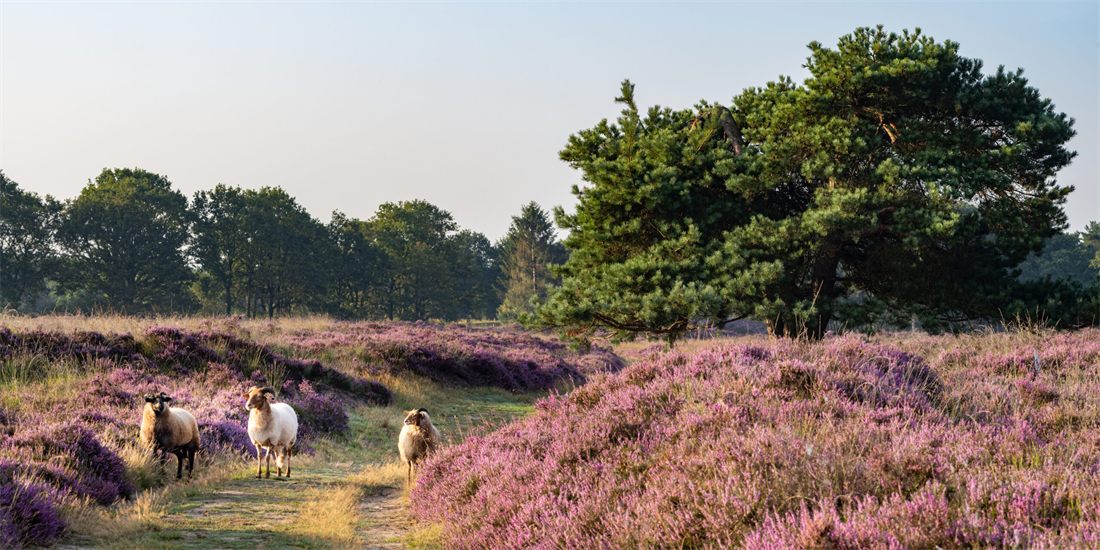
The Kalmthout heath is one of the oldest and most valued nature reserves in Flanders. Protected since 1941, the Kalmthout Heath consists of an area of marsh, heath, old inland dunes and woodlands, partly bordering the delta of the river Scheldt. Surrounded by NH3 sources, it suffers from nitrogen influx towards its fragile ecosystems. The surveyed areas will include a large part of the heath, together with its dominant source region upwind (which will be determined after careful analysis of modelled and satellite data).
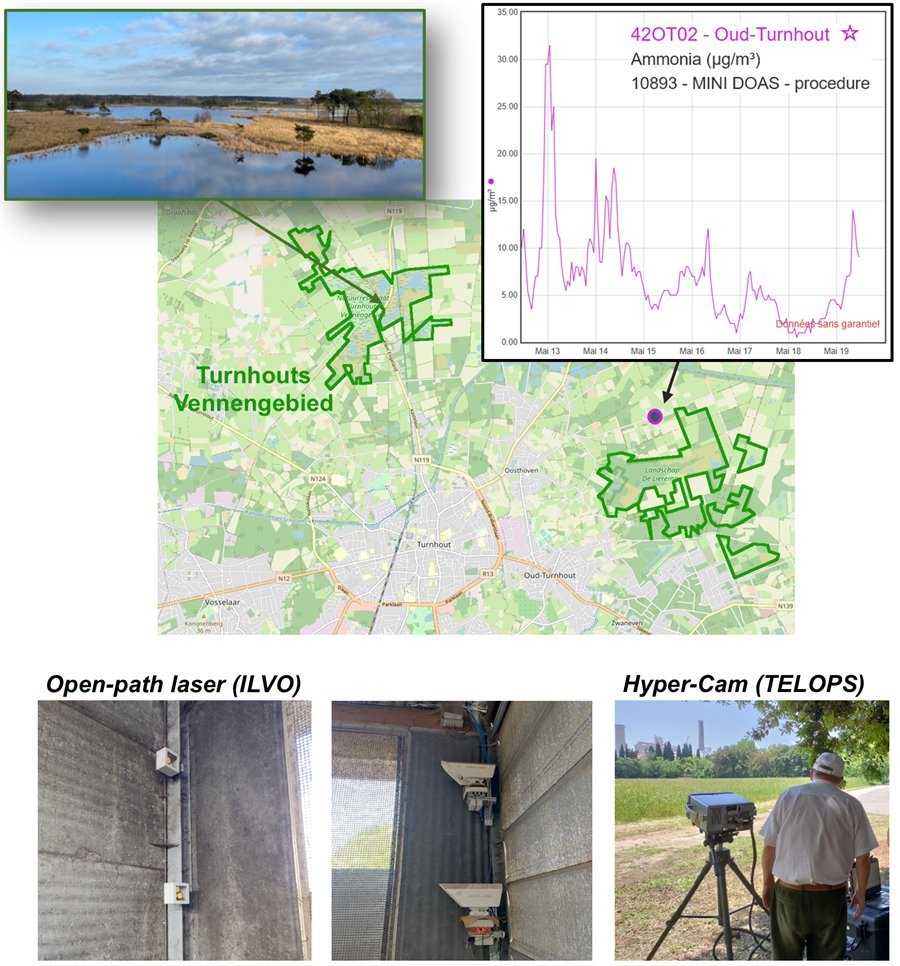
The fen area of Turnhout (2208 ha) covers 11 protected habitats and 18 protected species and is coded as a Special Protection zone for Nature Conservation in the European Union (SBZ-H BE2100024). It has a varied landscape of heath on sand dunes, dry and wet heath, fens and woods. The survey area will also cover a historical official monitoring site of the VMM (“Vlaamse Milieu Maatschappij” which guards the air, water and climate quality in Flanders).
Objective 5
To characterise local source contributions to point source measurements
Objective 6
Identify strengths and weaknesses of models in simulating the spatio-temporal distribution of NH3 and related compounds
Objective 7, with WP 2
To derive a highly resolved top-down emission inventory over Belgium and the Netherlands
Objective 8
Establish the NH3 trends (2008–present), assess their causes and estimate their consequences for air quality and NHx deposition over Belgium and the Netherlands
Objective 9
Quantify the contributions of NH3 and NOx emissions to nitrogen deposition over Belgium and the Netherlands
Objective 10
Validation of BEAM datasets and main findings

Université libre de Bruxelles
People

Royal Belgian Institute for Space Aeronomy
People
Flanders Research Institute for Agriculture, Fisheries and Food
People

Freie Universität Berlin
People
With GFZ Helmholtz Centre Potsdam and Swiss Flight Services (SFS)
The atmospheric spectroscopy group from the Spectroscopy, Quantum Chemistry and Atmospheric Remote Sensing (SQUARES) lab at ULB has a strong expertise on the sounding of atmospheric composition from satellites. The group develops and maintains state-of-the-art radiative transfer software, which is used along with inverse methods to retrieve atmospheric trace gas concentrations and aerosol properties. The research outcomes, presented in numerous articles at the forefront of the field (around 300 publications in the last 15 years), have contributed to demonstrate the potential of thermal infrared atmospheric sounding to monitor, understand and forecast atmospheric processes at various spatial and temporal scales. In particular, the group is at the forefront with respect to NH3 satellite measurements (production of the first world map of NH3, identification of hotspots, investigation of short and long term temporal variability including trends, etc.) and to the issues related to the perturbed nitrogen cycle.
The expertise of ULB in relation to the monitoring of reactive nitrogen compounds is recognised internationally, which is testified by the group’s involvement in several European projects in the last ten years. The group maintains an extensive network of collaborations with e.g. the Centre of Ecology and Hydrology (CEH: M.A. Sutton, S. Reis, M. Vieno), the Department of Earth and Planetary Sciences (Harvard: D. Jacob), the Atmospheric Chemistry and Composition Group (Princeton: M. Zondlo, X. Guo), the Atmospheric Chemistry and Composition Modeling Group (MIT: C.L. Heald), the Laboratoire des Sciences du Climat et de l’Environnement (D. Hauglustaine).
Finally, as an additional illustration of its international recognition in this field, group members contribute to the preparation of the follow-up satellite missions on polar and geostationary platforms, which will form the space segment of the operational European atmosphere monitoring service for the next 25 years. It is also at the origin of the candidate Earth Explorer concept Nitrosat that would be dedicated to the mapping of NH3 and NO2 at the landscape scale.
BIRA-IASB is a Belgian federal scientific research institute. Its main tasks include research and service in the physics and chemistry of the atmosphere of the Earth and other planets. BIRA-IASB studies in particular the composition of the troposphere, with a focus on the processes controlling the formation of ozone and aerosols, such as the emission, chemical degradation and deposition of ozone precursors (NOx, CO, VOCs).
The project is carried out by the Tropospheric Modelling group (TMOD) which holds long expertise in (1) biogenic emission and atmospheric composition modelling, and (2) validation and exploitation of satellite observations for model verification/improvement and for top-down emission estimation through inversion techniques. Besides scientific research, the group also contributes to scientific applications and services. It has had multiple funding contracts with Belspo, ESA and the EU over the last 25 years. The TMOD team published 85 scientific papers in the last 10 years in peer-reviewed journals and made about 180 contributions to international congresses and symposia.
Flanders Research Institute for Agriculture, Fisheries and Food (ILVO) is an independent scientific research institute of Flanders’ Government. ILVO’s task is to generate knowledge for more sustainability in the agriculture, fisheries and agri-food sectors. To perform this mission, ILVO conducts multidisciplinary, ground-breaking and independent research. Using applied research, ILVO aims to provide answers for the challenges facing everyone involved in the greater food agri-food chain and the rural environment. The organisation employs a strategy where systems thinking, integration of “tacit knowledge” with new technologies, co-creation and five organisational values all take centre stage.
The represented research group, Environmental Technology, belongs to the Agricultural Engineering Research Area, part of the Technology and Food Science Unit at ILVO. This research group focuses on emissions related to livestock production. The Research area has expertise in measuring, monitoring and modelling emissions from livestock housing (including odour, ammonia, greenhouse gases and dust particles) for over 10 years. The research team consists of senior and junior researchers as well as specialised technical staff.
Furthermore, the research area evaluates emission reducing management and techniques following international recognized protocols. The ILVO site is equipped with different livestock test facilities and ILVO has close contact with livestock farmers, both allowing for applied research in the sector. The research group is equipped with different instruments: high-end gas analysers and sensors, anemometers and a gas analysis test facility and an odour lab.
The research group executes also research instructed by the Flemish government (environmental policy area) and by the Netherlands’ government (Ministry of Agriculture, Nature and Food Quality). As a result of this close collaboration, ILVO responds to the critical needs of policy makers. One example is the Interdepartementale Werkgroep PAS to support the measures to further reduce the impact on the fen area of Turnhout, a special Protection zone for Nature Conservation in the European Union (SBZ-H BE2100024) (Vlaamse Overheid, 2023).
Expertise
People
Together with